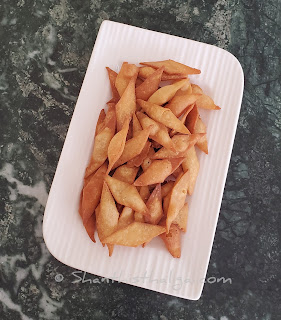
INGREDIENTS:


Javvarisi (Sago/Sabudana) - 1/2 kg
Water - 5 1/2-6 ltr
Green chillies - 3 or 4 medium size
Salt - to taste
Lemon juice of 1 key lime - (optional)
Hing - 1 tsp.
This vadam is a crunchy and delicious treat for our taste buds. This is very easy to make. It can be served as a side dish in South Indian thali or can be had as a snack.
METHOD:
Clean javvarisi (sago) without mud and stones, wash gently two or three times and drain the water completely. Now pour water an inch above sago, soak overnight. (Use maavu javvarisi, do not use nylon javvarisi).
Next day morning, grind green chillies with little salt, hing and lemon juice, strain and keep ready. If you grind it very fine, you need not strain. Measure water and keep ready.
The sago would have absorbed all the water by now. Rake the sabudana gently with fork or hand. Add half a litre of water and gently mix without lumps.
Heat a heavy bottomed vessel, add remaining water, when it boils add the sago mixture. When half done, add green chilli water. (If the paste is very fine, you can add directly without straining). Add salt and mix well. Usually, for vadam, use little less salt, as the vadam turns salty when dried in sun. (You can taste and see. You should feel the salt is little less). Cook until the sago turns translucent.
When slightly cool, spread a cotton cloth or quality plastic sheet in mottai maadi (open terrace) and pour the mixture with a spoon to a round shape. Dry in the hot sun for two to three days until bone dry and store in an air-tight container. Deep fry in hot oil when required. Serve with South Indian meals as side dish or can be had as snack.

You can add tomato puree or pudina puree when half done and cook as said above for pudina javvarisi vadam and tomato javvarisi vadam. I made tricolour vadam like this for our Independence day.

NOTE:
1. Its always better to use clean white cloth to spread vadam, to prevent health hazards. Alternatively you can use a good quality plastic sheet.
2. Its better to add little lemon juice. If you add more lemon juice, vadam will turn red while frying.
3. Add little green chillies, just for taste. If you add more, the spicy, pungent aroma(நெடி) of the chilli goes straight to the nose while eating and will cause irritation in nose.
4. Use little less salt than usual, as the vadam turns salty when dried in sun. (You can taste and see. You should feel the salt is little less).
5. If using the cloth for drying, the vadam sticks to the cloth and it will be difficult to peel the vadam. How to take vadam from cloth?
When the vadam is dry completely, turn the cloth upside down, sprinkle water on the backside of the cloth, now turn the cloth and within few minutes, it will be easy to peel the vadam. Transfer to a big plate, and sun dry again for a day or until completely dry.